
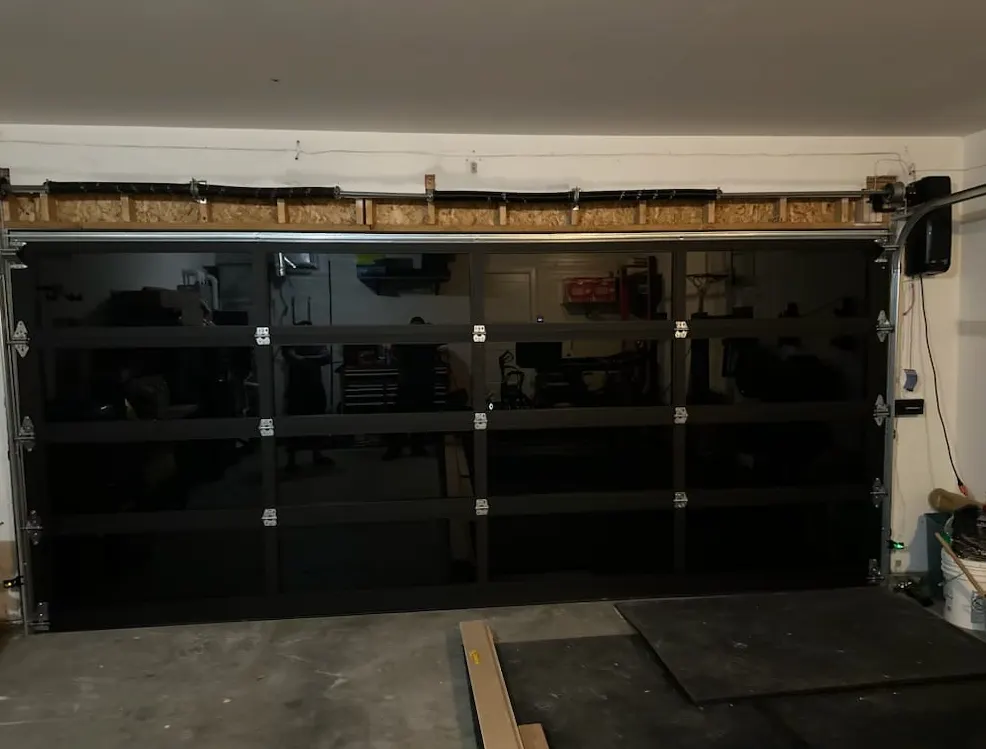
What a Technician Sees Walking Up to One of These Doors
On a typical service call for a door from the 1990s or earlier, the pattern is almost always the same before the technician even touches anything. The door is heavier than modern doors, usually a single layer of steel with no insulation. The springs are original or close to it, often visibly rusted at the coils from years of humidity. The opener is a older chain-drive unit with no battery backup and, more importantly, no modern safety sensors — or sensors that were added later but aimed slightly off, which means they don't actually work. The panels have some denting and the paint is chalky from UV exposure, but structurally the door itself still swings fine. This is usually the moment one spouse says \"see, it's fine, why are we talking about this\" and the other says \"it's not fine, it's a liability.\" Both of them are a little bit right, which is the whole problem.
The Short Answer: Some of This Is Genuinely Dangerous. Most of It Isn't.
An old garage door isn't automatically unsafe just because it's old. But there are three or four specific things on pre-2000s doors that cause real injuries and should be retrofitted or replaced regardless of how good the door otherwise looks. Everything else is cosmetic, and replacing it is a style and comfort decision, not a safety one.
Retrofit These — Not Optional
- Missing or misaligned auto-reverse sensors. Doors made before the mid-1990s often predate mandatory photo-eye sensors entirely. If your opener has no small sensor eyes mounted a few inches off the garage floor on each track, or if they're there but the door doesn't reverse when something blocks the beam, this is the single most important fix on this list. A door that doesn't reverse when it hits a person, pet, or object is a liability a spouse arguing \"just leave it\" cannot actually win.
- Original torsion or extension springs with no containment cable. Springs under this much tension can and do snap, and when they do, uncontained springs or cables become projectiles. If you've never had the springs replaced and there's no safety cable running through extension springs, that's a straightforward, affordable retrofit — not a reason to replace the whole door.
- Opener with no manual release testing or a stuck/rusted release cord. In this area, power outages during storm season are common enough that the emergency release needs to work on demand, not just in theory. If the handle is rusted solid or nobody in the house knows how to use it, that's a safety gap worth closing immediately, independent of anything else about the door's age.
- No wind-load bracing on a door exposed to storm-force gusts. Older doors, especially ones installed before hurricane-related wind-load expectations became standard, often have thinner track bracing and fewer stiffening struts than current doors. If your panels bow visibly during heavy wind or you've had a track pull loose in a prior storm, that's a structural retrofit worth doing before the next major system comes through, not a wait-and-see item.
Leave These Alone — Cosmetic, Not Dangerous
- Faded paint, chalking, or minor surface rust on panels. Salt air and humidity will do this to any door eventually. It affects looks, not function, and repainting or a panel swap can wait until it actually bothers you.
- Dents from decades of minor bumps. Cosmetic panel replacement is available if you want a cleaner look, but a dent doesn't compromise the door's ability to open, close, or seal.
- Lack of insulation. An uninsulated steel door in a hot, humid climate affects comfort in an attached garage more than safety. It's a worthwhile upgrade if you use the garage as a workspace, but it's not urgent.
- Manual lift with no opener at all. Plenty of older doors still operate by hand and do it safely. Adding an opener is a convenience upgrade, not a safety fix, as long as the springs and cables are sound.
- Outdated window style or hardware look. Decorative hinges, handles, and window cutouts from the 90s are a style choice. Replace them when you're ready for a new look, not because they pose any risk.
Why This List, Specifically, in This Climate
The reason springs and rust show up near the top isn't abstract — constant humidity plus afternoon downpours accelerates corrosion on exposed metal hardware faster than it would in a dry climate. A spring that looks fine on a dry November morning can be more compromised than it appears after years of moisture cycling. Wind-load bracing matters here specifically because this area sits squarely in hurricane season's path, and a door built before wind-load expectations were standard practice simply wasn't engineered for the gusts a modern storm can produce. These aren't generic cautionary notes; they're the specific failure points this climate accelerates on an older door.
How to Actually Settle the Argument
Walk the garage door together and check four things: do the sensors reverse the door when you wave something through the beam at ankle height, is there a cable running through any exposed extension springs, does the manual release handle move freely, and do the panels flex noticeably in strong wind. If all four check out, the cosmetic stuff really can wait — that's not one spouse \"giving in,\" that's just what the evidence shows. If even one of those checks fails, that's the item to fix now, and everything else stays exactly where it is on the list: later.
When to Call Wellington Garage Door Pro
If you walk through that checklist and find a spring without a containment cable, sensors that don't trigger a reversal, or a door that visibly flexes in storm winds, that's the point to call in a professional rather than attempt a DIY fix. We handle Garage Door Spring Repair with proper containment hardware, and we offer Garage Door Maintenance & Tune-Up visits that check sensor alignment, spring tension, rust on tracks, and wind-load bracing in one visit — which settles most of these arguments in about twenty minutes flat.
If your 1990s-or-older door needs an honest safety check before the next storm season, call Wellington Garage Door Pro. We serve Wellington, Royal Palm Beach, Loxahatchee, Greenacres, Lake Worth, West Palm Beach, Palm Beach Gardens, and Boynton Beach, and we'll tell you straight what needs fixing now and what can wait.