
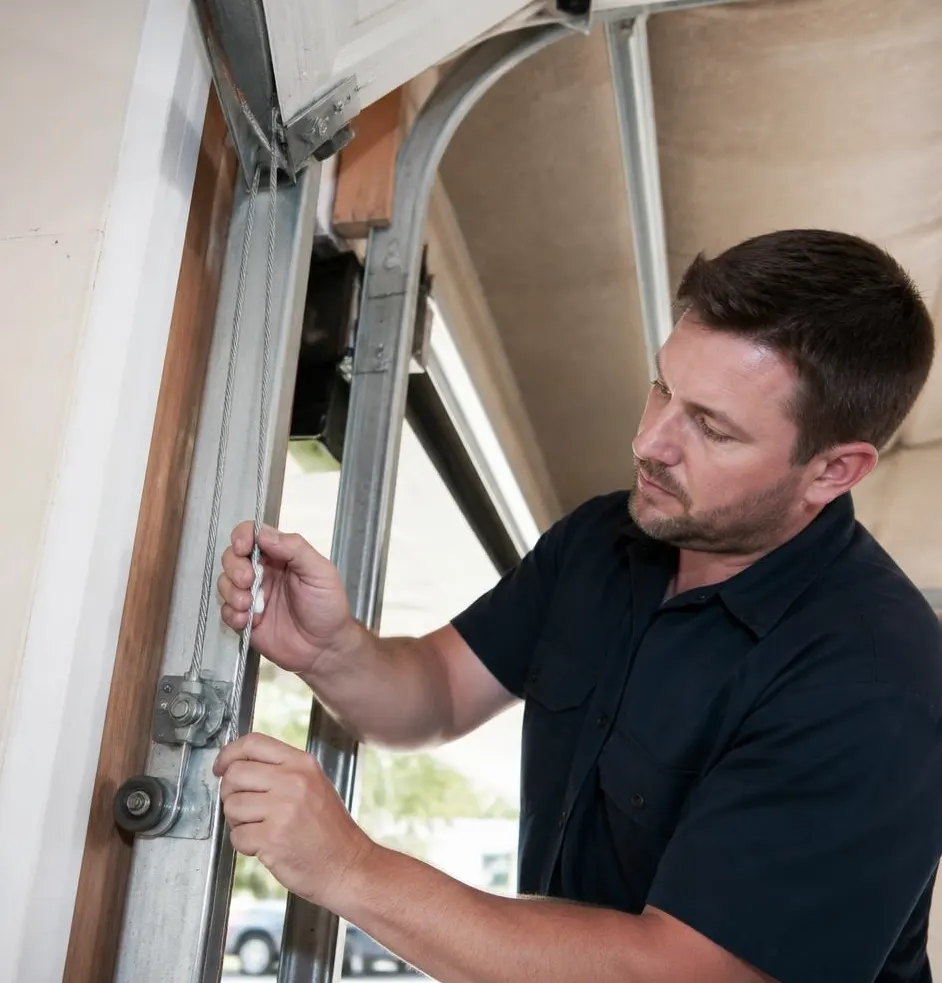
What a Technician Sees First
Most calls about a garage door that won't open start the same way: the homeowner has already hit the remote button five or six times, flipped the wall switch, maybe banged on the opener housing. By the time we arrive, there's often a light drizzle still coming down or the humidity is thick enough to fog a cold drink on the counter. That matters, because moisture and heat cycling play a bigger role in these calls here than most homeowners expect. We don't start by assuming the worst. We start at the top of a short list and work down, because the fastest fixes are almost always checked first.
1. Power to the Opener
Before touching springs or tracks, we check whether the opener is actually getting power. A tripped breaker, a loose outlet, or a battery backup that's drained after a recent storm-related outage will stop the door cold with zero other symptoms. We look for a lit indicator light on the motor unit and test the outlet directly. This takes two minutes and solves more calls than people expect.
2. Remote and Wall Switch
Dead remote batteries or a wall switch that's lost its connection to the opener are next. We test the wall-mounted button directly, since it bypasses the remote entirely. If the wall switch works but the remote doesn't, it's a battery or reprogramming issue, not a door problem.
3. Safety Sensor Alignment
The two small sensors near the bottom of the tracks have to be aligned and unobstructed, or the opener won't let the door move at all. Afternoon downpours and high humidity can leave condensation or a film on the lenses, and a stray leaf blown in during a storm can sit right in the beam. We check both sensors for a steady light, wipe the lenses, and realign if one has drifted out of position, which happens more than people think after a door gets bumped by a bike or a cooler.
4. Manual Lock Engagement
If the door has a manual lock bar on the inside, a bump or a prior power outage sometimes leaves it engaged without anyone noticing. We check this before assuming an electrical or mechanical failure, since it's a thirty-second fix.
5. Broken Spring
If the opener runs but the door won't lift, or it won't budge even by hand with the opener disconnected, a broken torsion or extension spring is the likely cause. These components cycle thousands of times a year and are under heavy tension, so a snap is sudden and complete. This is not a repair to attempt yourself; it requires the correct replacement spring rated for the door's weight and proper tensioning tools. We replace the spring, test the balance, and recheck the cables while we're in there.
6. Off-Track or Bent Track
Wind-load stress during storm season and repeated slamming from a misaligned sensor can knock rollers out of the track or bend the rail itself. A visible gap between the roller and track, or a door that's crooked when it's partway open, points here. Depending on severity, this is either a realignment or a track section replacement.
7. Opener Motor or Drive Gear
If everything upstream checks out, we open the opener housing and inspect the drive gear and trolley carriage. A stripped plastic gear, common on older units after years of heat exposure in an unconditioned garage, will cause the motor to run but the door to stay put.
8. Panel Swelling or Binding
Wood or composite panels that have absorbed humidity can swell slightly and bind against the frame or weatherstripping, especially after a wet stretch. This shows up as resistance at a specific point in the door's travel rather than a total refusal to move.
When to Call Wellington Garage Door Pro
If your door won't open and the quick checks above don't explain it, call us before forcing anything further. We handle Garage Door Spring Repair and Off Track Door Repair as same-week calls across Wellington, Royal Palm Beach, and the surrounding area, and we bring the right spring and alignment tools on the first visit so it's one trip, not three.
Give Wellington Garage Door Pro a call today to get your garage door moving again, fast and done right.