
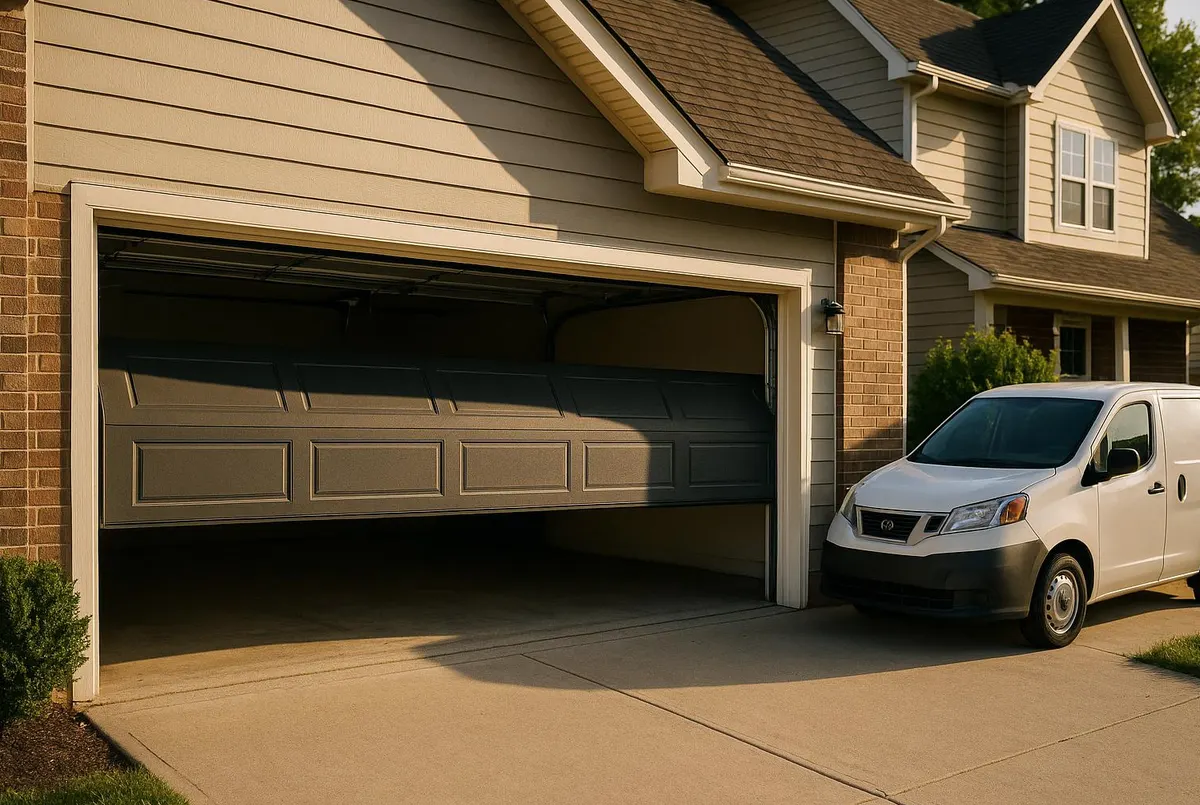
Replacing a garage door spring yourself is dangerous because a wound torsion spring holds hundreds of pounds of stored energy in a coil of steel, and releasing that energy with the wrong tools or technique can snap bones, blind an eye, or crush fingers in a fraction of a second. That's not an exaggeration for effect — it's the actual mechanism behind thousands of emergency room visits every year, and it's why professional technicians treat springs with the same respect they'd give a loaded tool.
What Actually Goes Wrong When a Spring Lets Go
A standard torsion spring above a residential garage door is wound tight enough to lift 200-400+ pounds of door weight. When that tension releases suddenly — because a winding cone slips, a cheap tool shears, or the spring itself snaps under load — the stored energy has to go somewhere. It typically goes into:
- The winding bar itself, which can spin violently out of the technician's hands and strike the face, hands, or chest.
- The spring fragments, which can shoot across the garage at high speed if the spring breaks mid-wind.
- The door, which can slam down without warning if the spring was the only thing holding it in a raised position, crushing anything underneath, including fingers caught in the track.
- Cables under tension, which can whip loose and lacerate skin or cause serious eye injuries.
Emergency rooms see a consistent pattern from these failures: deep lacerations, broken fingers and hands, facial fractures, and eye trauma from flying metal. Most of these injuries happen not because the homeowner was careless, but because they didn't know the job required specialized winding bars, correct spring sizing, and a very specific sequence of steps — not a flathead screwdriver and a YouTube video.
Why Torsion Springs Are the Riskiest Part of the Job
Extension springs (the long springs that run along the horizontal tracks) are dangerous, but torsion springs mounted above the door are worse because the energy is concentrated and the winding process requires precise, incremental turns with bars rated for the job. Using a screwdriver, pliers, or an undersized bar instead of the correct winding tool is one of the most common ways people get hurt — the tool slips or bends under load and the energy transfers straight back to the person holding it.
The Florida Factor: Rust, Humidity, and Wind-Load Hardware
Garage door springs and cables in this part of Florida don't age the way they do in drier climates. Salt air drifting inland, combined with constant humidity and afternoon downpours, speeds up corrosion on spring coils and cable ends in ways that aren't always visible from the floor. A spring that looks fine from below can be pitted with rust along the inner coils, which weakens it unevenly and makes it far more likely to snap unpredictably mid-repair rather than fail gradually.
Homes built or retrofitted to meet wind-load requirements for hurricane season often have heavier, reinforced doors paired with springs sized specifically for that extra weight. Swapping in a generic spring that isn't matched to the door's actual weight and wind rating doesn't just reduce performance — it creates a mismatch between stored tension and door weight that makes the whole system behave unpredictably.
The Specific Actions That Actually Prevent Injury
- Never use a screwdriver, pliers, or a single short bar to wind or unwind a torsion spring. Proper winding bars are sized to fit the winding cone exactly and are used in a specific sequence.
- Always secure the door with locking clamps on the track before touching the spring system, so it can't suddenly drop.
- Replace both torsion springs together if one has failed or shows rust pitting — the second one is almost always close behind, and mismatched springs strain the opener and track.
- Inspect cables at the same time as springs; salt-air corrosion on cables often mirrors what's happening inside the spring coils.
- Wear eye protection and keep bystanders, pets, and kids out of the garage during any spring work.
- Stop immediately if the door binds, the spring doesn't move smoothly, or anything feels off — that resistance usually means something is already failing.
When to Call Wellington Garage Door Pro
If a spring has snapped, looks rusted or stretched unevenly, or your door has suddenly gotten noticeably heavier to lift by hand, that's the moment to call rather than reach for tools. Our Garage Door Spring Repair service handles correct sizing, matched pairs, and safe winding with the right equipment every time. If your springs and cables are intact but due for a check before hurricane season humidity does more damage, our Garage Door Maintenance & Tune-Up service catches rust and wear early, before it turns into an emergency repair.
If your garage door spring has failed or you're noticing warning signs, call Wellington Garage Door Pro today for fast, safe service across Wellington, FL and the surrounding area.